I am a video editor. 52 days ago I could not build software. Today my own AI video editor has 24 tools, 32 skills and 26,982 lines of code, and it made the reel that sent you here.
This page is the exact method. It works for any field: accounts, design, medicine, law, marketing, teaching. You do not need a CS degree to start. You need one boring task and one hour.
npm install -g @anthropic-ai/claude-code
Claude Code is a paid tool. Any AI coding tool works with this method: Cursor, Codex, Gemini CLI. The method matters more than the tool.
When AI arrived, everybody got the same tools. Same ChatGPT. Same Claude. Same models.
A non-technical person got a better assistant. They ask, it answers, and tomorrow they ask again.
A technical person got a factory. They build a small tool once, and the tool does the task every day after that.
So the question to stop asking is "can AI do my job?" The question to start asking is "can we build a tool that does one repetitive part of my job?"
Same person. Same account. No team. The only thing that changed is the system.
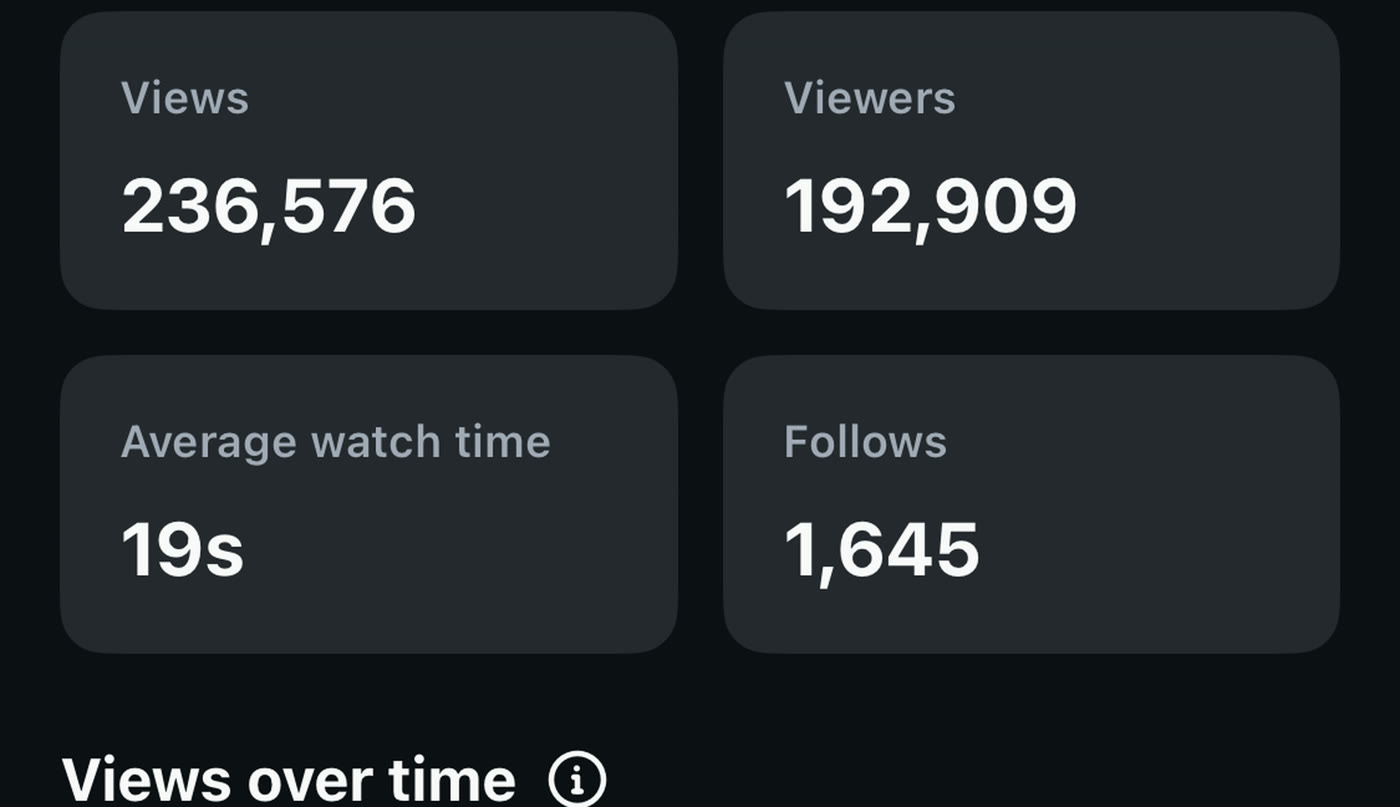
My own Instagram insights for reel #41, screenshot taken 2026-09-20. It passed 215,575 views in its first 8 days.
Nothing here is theory. Every step is something I did, in this order.
Not your whole job. One part. A weekly report. Invoices. Renaming files. Sorting emails. Cutting silences out of a video.
The test: you do it at least once a week, it follows the same steps each time, and you could explain it to an intern in 5 minutes.What goes in. What comes out. What a good result looks like. Use plain words. A rough drawing is fine.
I drew my editor as text before a single line of code existed:
 R | DRAWER   |        THE PICTURE        | THE CARD
 A | Media    |   click, drag, corners    |  Position  54  236
 I | Text     |   double-click to type    |  Size     972  560
 L | Captions |                           |  Opacity  ====
   | Scenes   |  SCENES  F C N C C N C F  |  > Animation
   |          |  V1  [facecam .........]  |  > Media
Open your AI coding tool in an empty folder. Paste the starter prompt below. Ask for the smallest thing that runs today. Ugly is fine. One file is fine.
The trap: people ask for the finished product on day one, get a big broken mess, and quit. Version one only has to run.Not a test file. Your real task. Write down every single thing that annoys you while you use it.
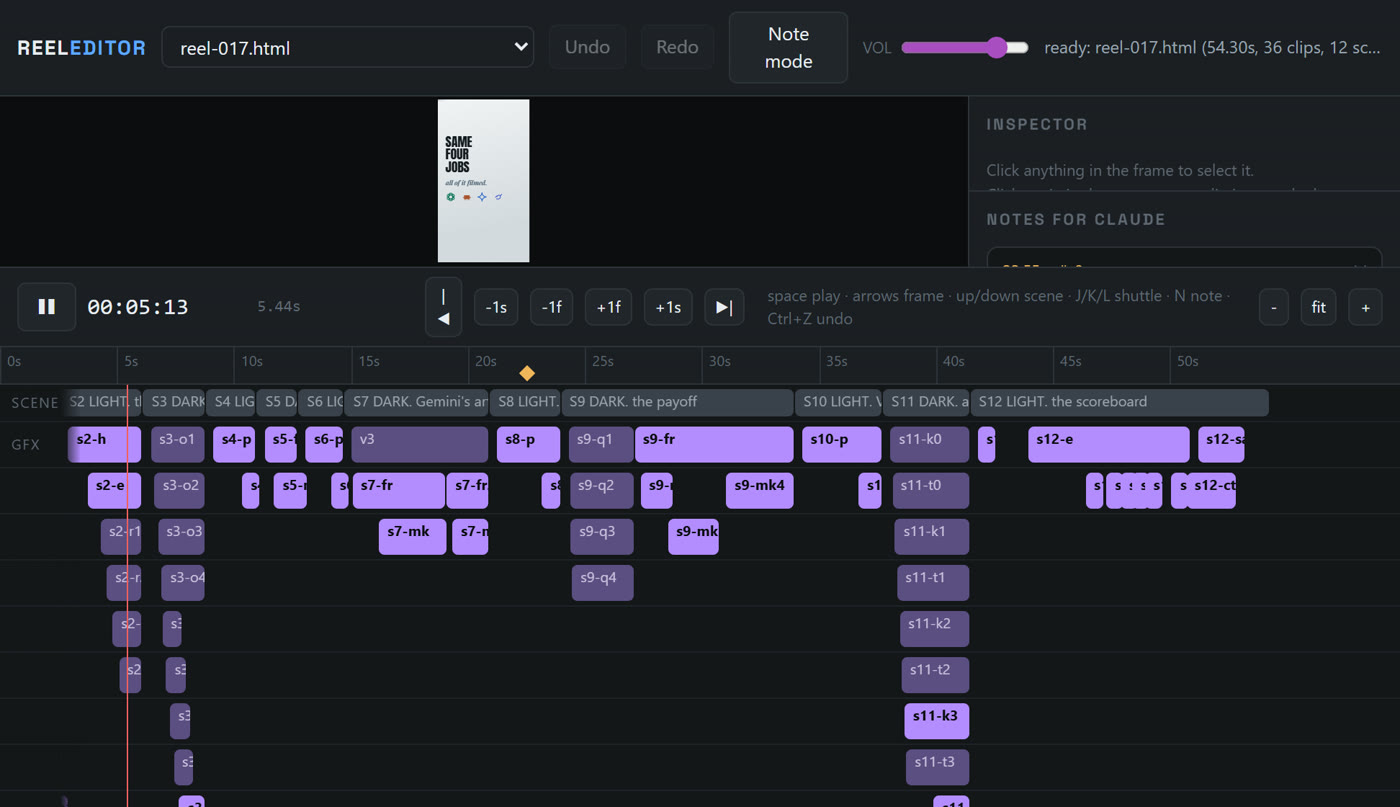
My first editor, 11 August 2026. Grey blocks and a notes box. It could only make small changes. I used it anyway.
Take the most annoying item on your list. Ask the AI to fix only that. Test it. Stop. Next session, the next item.
Why one: when you change five things and it breaks, you do not know which change broke it. One change, one test. That is the whole method.Every time you correct the AI, write the correction down as a rule in a plain text file in the project. In Claude Code that file is called CLAUDE.md. The AI reads it at the start of every session.
This is how the tool starts to work the way YOU work. My rules file holds things like "never invent a number" and "show me still frames before you build anything".
Without this you repeat the same correction forever. With it, a mistake only happens once.When something goes wrong, do not just fix it. Ask the AI: "write a check that fails if this ever happens again." Run all the checks before anything goes out.
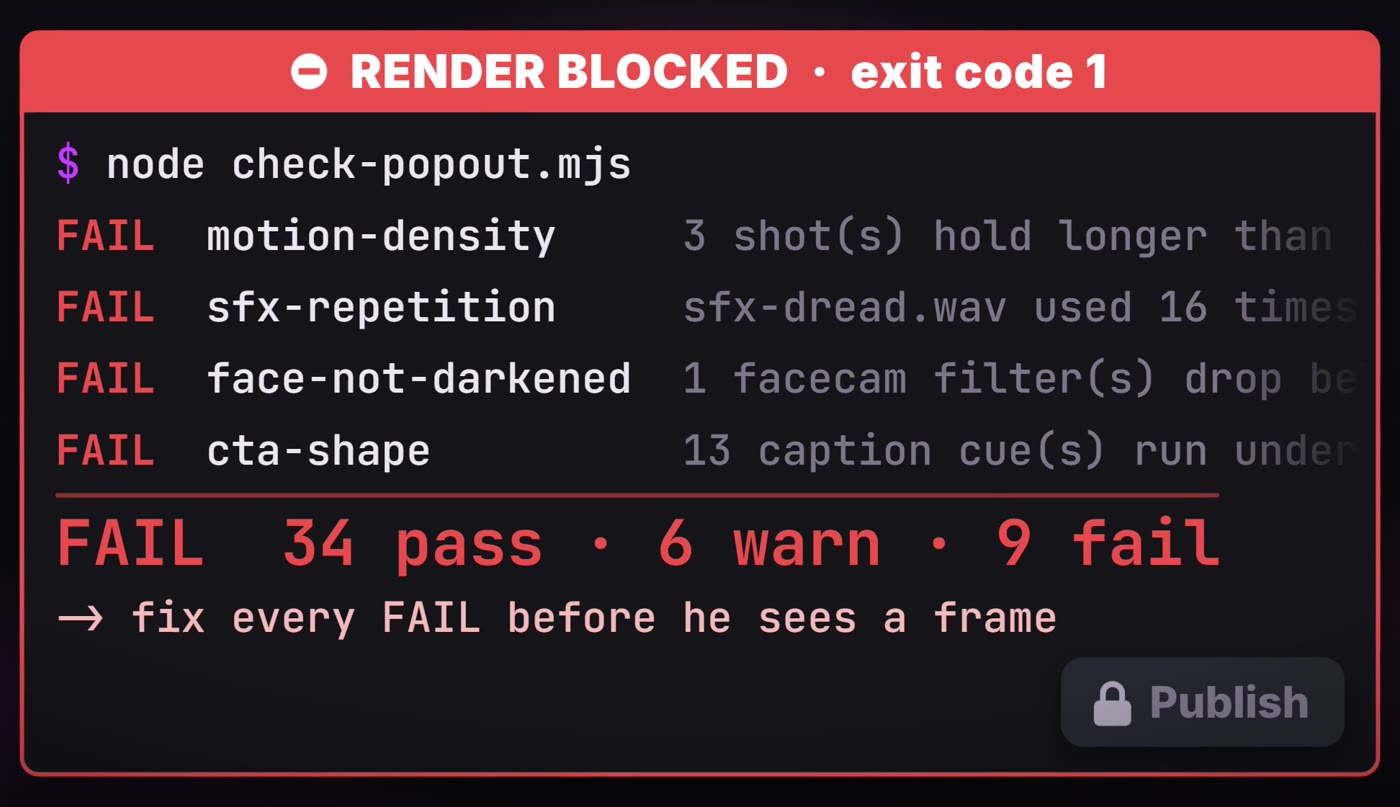
A frame from the reel, built from my checker's real output on an old video: 9 fails, so the render is blocked.
This is the step that makes it a system. Mine started as 27 checks on 26 August. Every note I gave on a video became a new one, and it now runs over 40. It refuses to render a video that breaks my own rules.After a few weeks you will have several small tools. Now ask the AI to connect them, so the output of one becomes the input of the next.
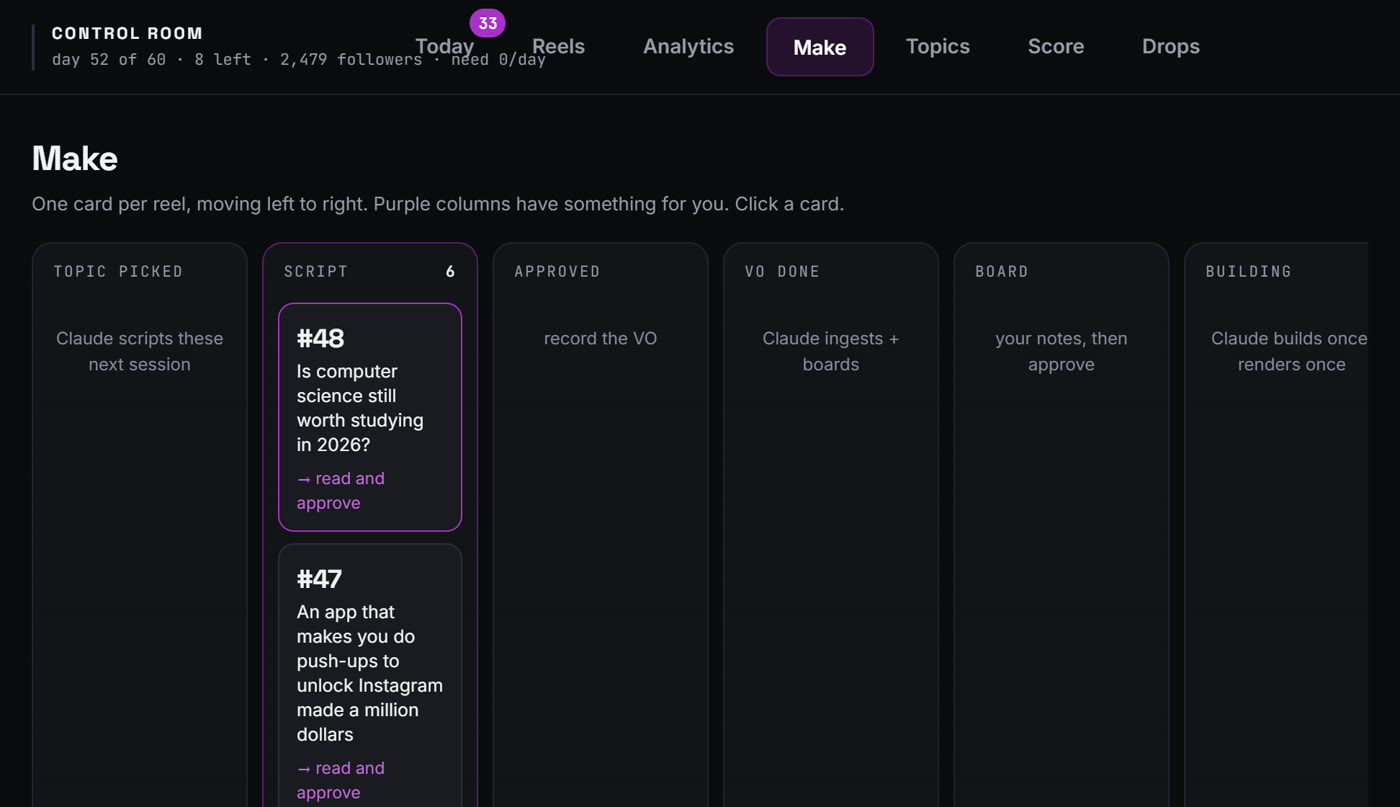
My control room today. One card per video, moving left to right. This reel is the card in the SCRIPT column.
Fill in the four lines in CAPITALS, then paste it into your AI coding tool in an empty folder.
I am not a programmer. I work as a YOUR JOB.

Every week I do this task by hand: DESCRIBE THE TASK IN 2 OR 3 SENTENCES.
What I start with: WHAT GOES IN (files, emails, a spreadsheet, a video).
What I need at the end: WHAT COMES OUT.

Build me the simplest possible tool that does this. Rules:
1. The worst version that works. One file if you can. No extra features.
2. It must run on my computer today. Tell me exactly what to install
   and the exact command to run it.
3. Before you write any code, ask me up to 5 questions about how I do this task.
4. Explain every step in plain English. I want to understand what you built.
5. Create a file called CLAUDE.md in this folder. Every time I correct you,
   add the correction there as a rule, and read that file at the start
   of every session.

When it runs, I will use it on real work and come back with ONE thing to fix.
The line that matters most is number 3. Let it ask you questions. Your answers are the part no programmer could have written.
Real dates from my build log. Notice how small the early steps are.
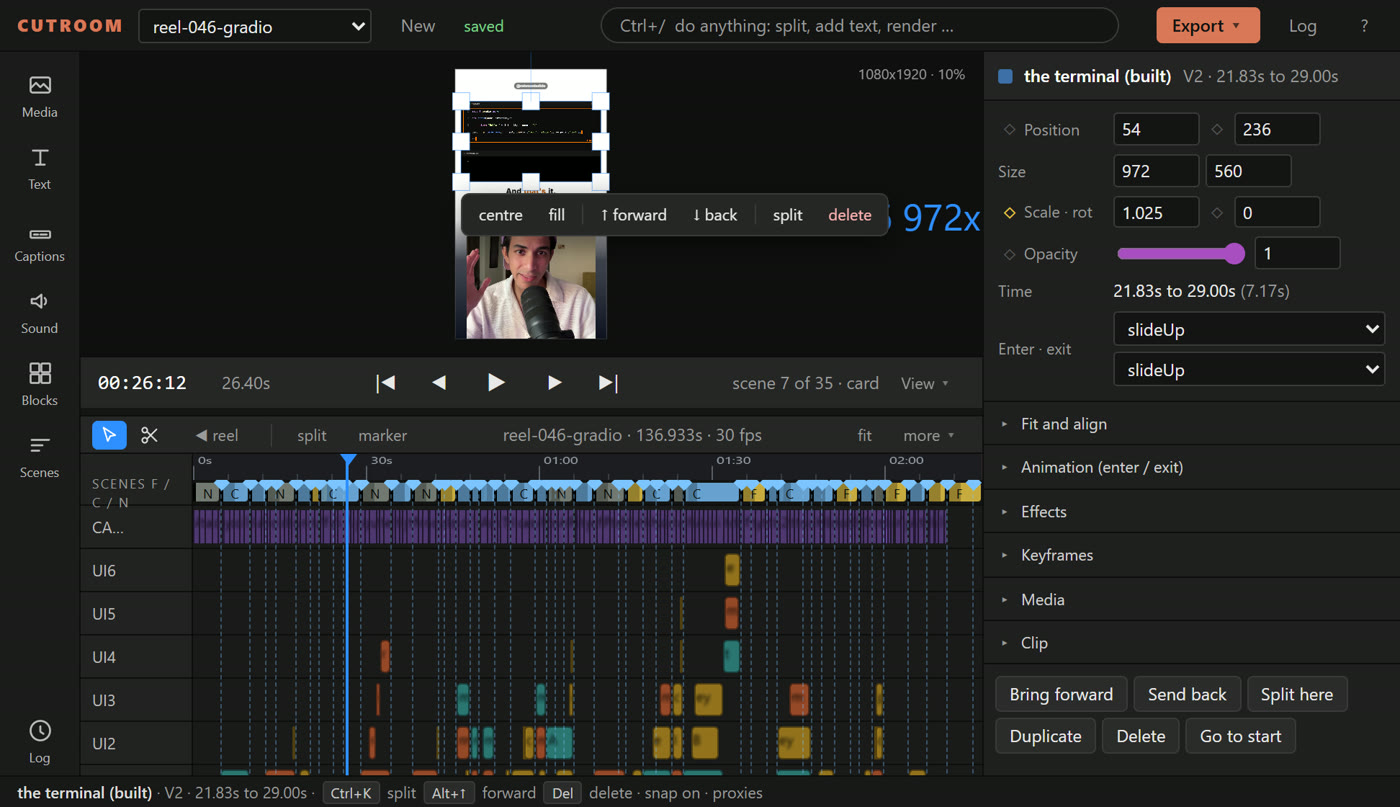
Cutroom today, with a finished reel open in it.
It did not replace me. I still record my own voice and face. I still decide what the video says. I still give notes on every one. The system does the hours of repeated work. The taste is still mine.
It broke constantly. Most sessions started with something broken. That is normal. Broken and improving beats perfect and imaginary.
I still learned real technical things along the way. What a file path is. What a terminal is. How to read an error message. You will pick these up as you go, and they are the part that makes you hard to replace.
So should you study computer science? If you can, yes. Understanding how software works gives you leverage in almost every field. But if you already chose another path, you are not late. Learn enough to build. That is the new floor.
The AI tool is paid. Everything else here is free to use.
Pick the task. Write what "done" looks like. Paste the prompt. Get the worst version running today.
Then fix one thing tomorrow.
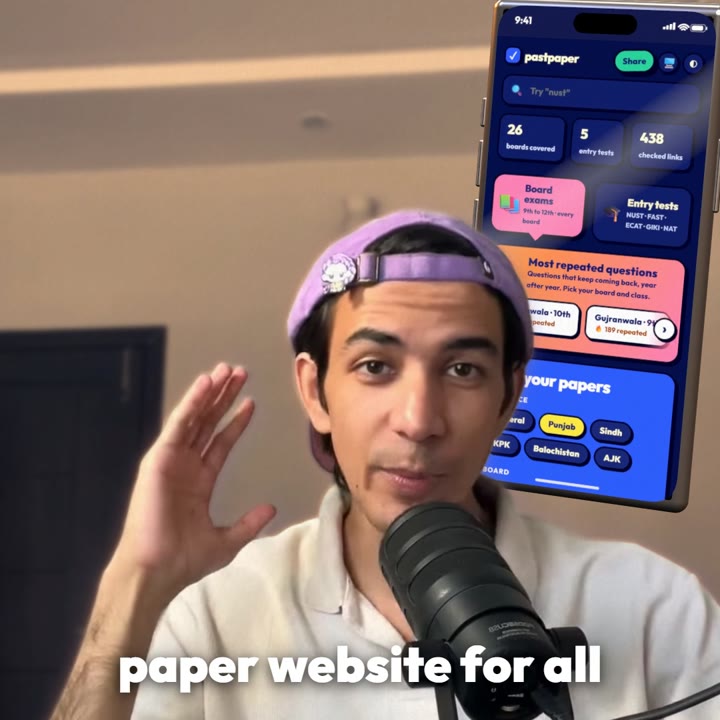 Reel #55 · comment PAPERSFree past papers for all of Pakistan. Built in one day./papers →
 Reel #54 · comment FREELANCEHafiz Basit Ali. Freelancing, taught free./freelance →
 Post #8 · comment BANAO5 apps Pakistan needs. Nobody built them right./banao →

I've been building things people pay for since I was 10. Online game servers first, then $250K+ earned in tech. Now I build with AI in public, and every free thing from my reels lands on a page like this.
Free tools, honest feedback on your work, and people who answer.
Join free